JET-USA Pressure Washers Compared
JET-USA sells pressure washers ranging from compact electric machines for routine household cleaning through to much larger petrol and diesel units aimed at jobs where greater water flow, longer working reach or independence from mains electricity matters.
This comparison covers the RX470, RX535, RX540, RX540s, RW545, RX550, CX630, CX660, TX870 and DX800. The aim is not to crown one machine as the winner, because these models are built for very different jobs. Instead, this guide looks at pressure, flow, hose length, power source, weight and practical ownership considerations.
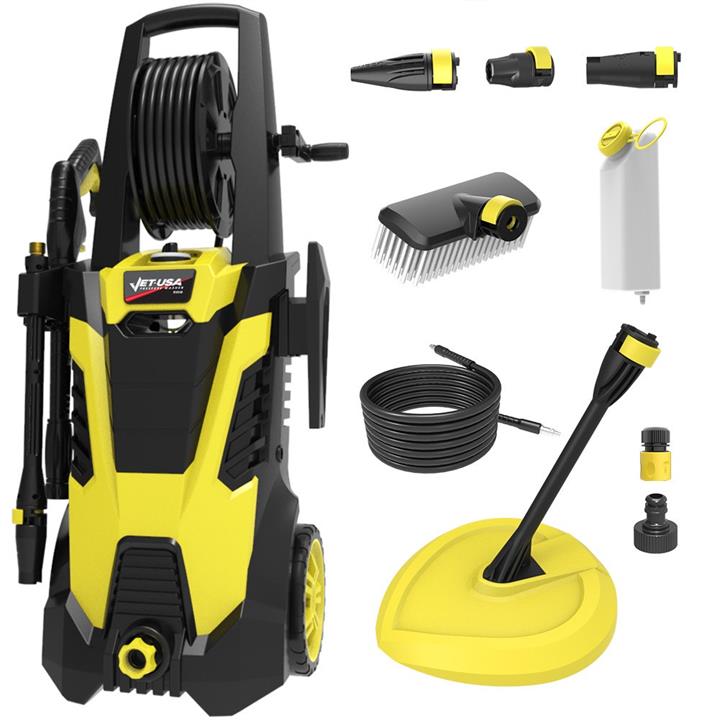
The newly added RX535 is a household electric model. Current published figures include an 1800W motor, 2600 PSI maximum pressure, 5.5L/min rated flow, 6.5L/min maximum flow, a 5m hose and 10kg product weight.
Testing statement: Firebusters has not personally tested these pressure washers. Specifications and product images are based on current supplier information and manufacturer material checked in September 2026.
Quick Choice Guide
RX535. 1800W electric, 2600 PSI maximum, 5m hose and a useful household accessory package.
RX540s. 2200W, 2900 PSI maximum and a 5m hose.
RX540. Similar electric format with a 10m hose for easier movement around vehicles and paved areas.
RW545. 2100W water-cooled motor, 3000 PSI maximum and 10m hose.
RX550. Higher published pressure and flow, but with more size and weight.
CX630 or CX660. Higher flow and no need for nearby mains electricity.
TX870 or DX800. Much larger machines with substantially higher published water flow.
JET-USA Pressure Washer Specifications
| Model | Power | Pressure | Flow | Hose | Weight / Format |
|---|---|---|---|---|---|
| RX470 | 2100W electric | 1800 PSI max 1600 PSI continuous | Approx. 6.2–7.1L/min | Legacy specification | Approx. 6kg |
| RX535 | 1800W electric | 2600 PSI max | 5.5L/min rated 6.5L/min max | 5m | 10kg |
| RX540 | 2200W electric | 2800 PSI max | 5.8–6.8L/min | 10m | 13kg |
| RX540s | 2200W electric | 2900 PSI max | 5.8–6.8L/min | 5m | 12kg |
| RW545 | 2100W water-cooled electric | 3000 PSI max | 6.5L/min rated 7.5L/min max | 10m | 18kg |
| RX550 | 3000W listed electric | 3500 PSI max 2500 PSI continuous | 6.8–8.5L/min | 10m | 24kg |
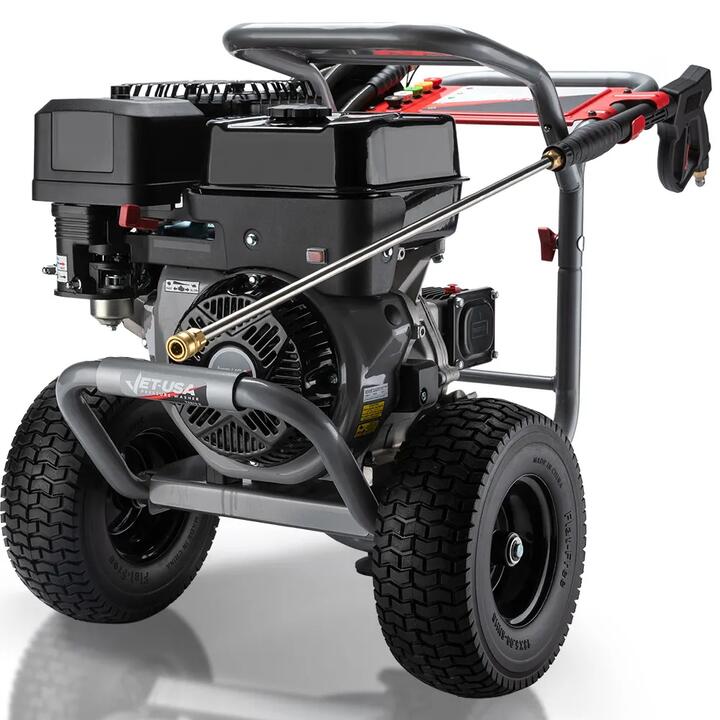
| CX630 | 212cc / 7HP petrol | 4800 PSI max 3200 PSI continuous | 9.5L/min | 10m | 28kg trolley |
| CX660 | 212cc / 7HP petrol | 4800 PSI max 3100 PSI continuous | 9.5L/min | 10m | 27kg trolley |
| TX870 | 420cc / 15HP petrol | 5000 PSI max 4207 PSI continuous | 15L/min | 20m wire-braided | Large petrol trolley |
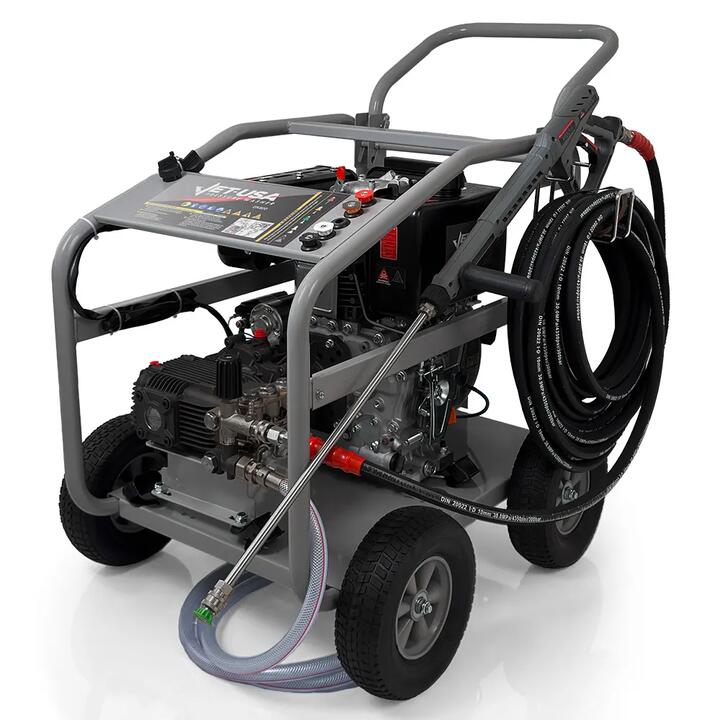
| DX800 | 418cc / 10HP diesel | 4000 PSI max 3600 PSI continuous | 17L/min | 15m steel-braided | 106kg four-wheel trolley |
Published maximum pressure figures should not be treated as the same thing as continuous working pressure. Product revisions can also change individual specifications, so confirm the current seller listing before purchase.
RX535: The Household Electric Starting Point

1800W Electric · 2600 PSI Maximum · 5m Hose
The RX535 is the most useful addition to this updated comparison because it fills the gap between older entry-level electric models and the larger electric machines.
The current RX535 specification lists a 1800W electric motor, 2600 PSI maximum pressure, 5.5L/min rated flow and 6.5L/min maximum flow. The supplied high-pressure hose is 5m long and the current product weight is 10kg.
That combination points toward ordinary household cleaning rather than very large-area washdown. A 10kg machine is relatively easy to move around a driveway or patio, but the 5m hose means the unit itself may need to be repositioned more often than an RX540 or RW545 with a 10m hose.
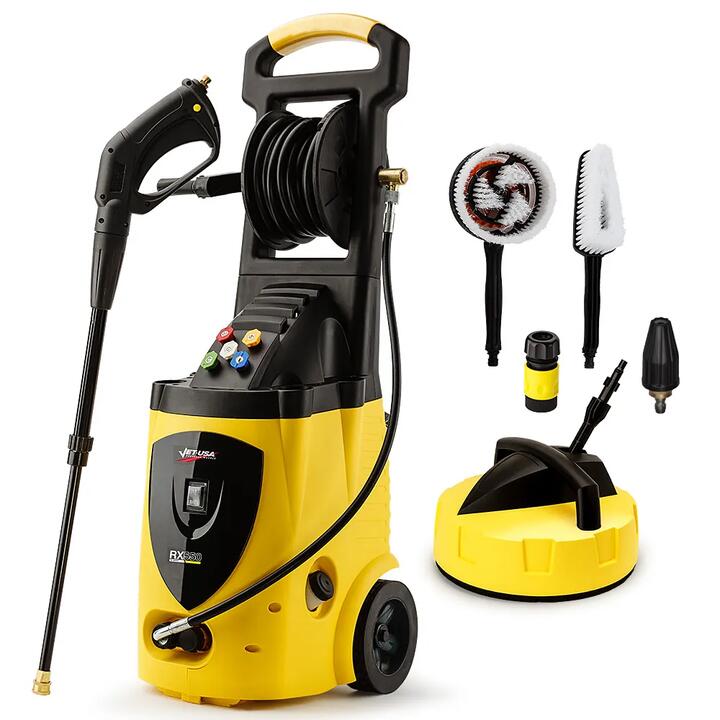
The package is also important. The current Edisons feed identifies the RX535 with two nozzles, a brush head, deck cleaner and detergent bottle. Those accessories make it more useful for mixed household jobs than a bare pressure-washer unit.
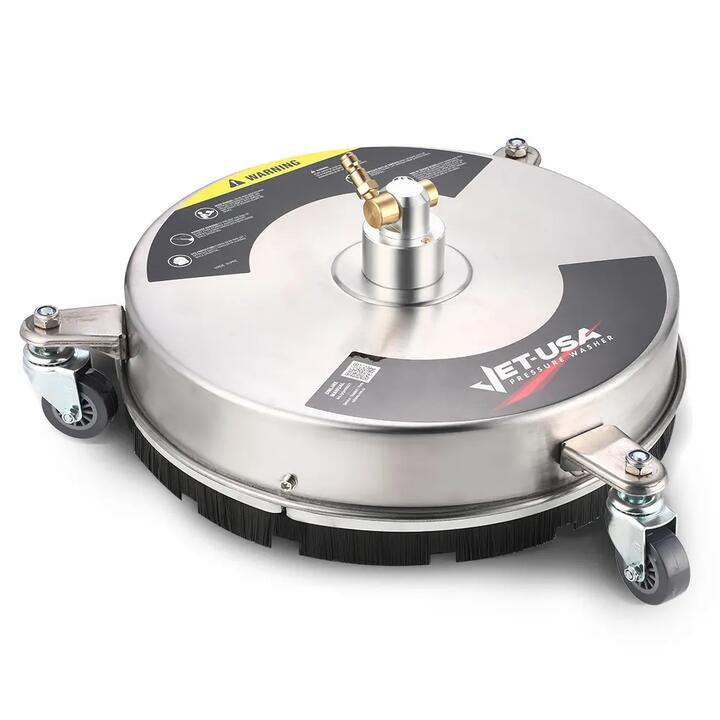
For vehicles and delicate painted surfaces, maximum pressure should not be the goal. Start with a wider spray pattern, greater stand-off distance and a small test area. For paving and harder outdoor surfaces, the surface-cleaner style attachment may help control spray and cover a wider area.
RX540 and RX540s: Similar Names, Different Practical Detail

RX540
The RX540 is listed at 2200W and 2800 PSI maximum pressure. Its standout practical feature is the 10m hose, which can reduce how often the machine has to be moved.

RX540s
The RX540s is listed at 2200W and 2900 PSI maximum pressure, but its hose is 5m. That makes it compact, although the shorter hose can matter around larger vehicles or broad paved areas.
The names are close enough to cause confusion, so do not assume specifications or accessories are interchangeable. When buying replacement hoses, lances, nozzles or fittings, confirm compatibility with the exact model rather than relying on the RX540 family name alone.
RW545 and RX550: Stepping Up Within the Electric Range

RW545
The RW545 moves to a 2100W water-cooled motor, 3000 PSI maximum pressure, 6.5L/min rated flow, 7.5L/min maximum flow and a 10m hose. It is also heavier at about 18kg.

RX550
The RX550 is the larger electric step in this comparison, with 3500 PSI maximum pressure, 2500 PSI continuous pressure, 6.8–8.5L/min published flow and a 10m hose.
Neither machine should be judged only by the PSI figure. The RW545 may appeal to users wanting a water-cooled electric design and longer hose, while the RX550 adds more output but also reaches roughly 24kg. Storage, lifting and moving the machine around steps or uneven ground become more important as size increases.
Petrol Models: CX630, CX660 and TX870
Petrol pressure washers solve a different problem. They do not need a nearby power point and they generally provide more water flow, but they introduce fuel, engine servicing, exhaust, noise, hot surfaces and extra weight.

CX630
212cc / 7HP petrol, 9.5L/min flow and 10m hose. A large step up in mobility and flow from the household electric range.

CX660
Another 212cc / 7HP petrol option with 9.5L/min flow. Compare trolley format, accessories and exact current package before choosing between the two.

TX870
420cc / 15HP petrol, 15L/min published flow and 20m wire-braided hose. This is a much larger machine for extensive outdoor work.
For ordinary suburban car washing or a small patio, petrol may add complexity without delivering a meaningful practical benefit. For larger blocks, machinery, long driveways or areas well away from an electrical outlet, the ability to work independently of mains power can become more valuable.
DX800: Diesel for a Very Different Type of Job

418cc Diesel · 17L/min · 15m Steel-Braided Hose
The DX800 sits well beyond ordinary household cleaning. Its current listing identifies a 418cc / 10HP diesel engine, 17L/min flow and a heavy four-wheel trolley format.
At about 106kg, this is not a machine you casually carry from one side of a suburban property to the other. Buyers considering it should think about storage, transport, fuel, maintenance, water supply and how the machine will actually be moved around the worksite.
Why Flow Rate Matters Alongside PSI
Pressure loosens dirt, but water flow helps carry that dirt away. This is why a pressure washer with a very large headline PSI figure is not automatically the fastest or most practical machine for every job.
The RX535, for example, is rated at 5.5L/min with a 6.5L/min maximum. The CX630 and CX660 are published at 9.5L/min, the TX870 at 15L/min and the DX800 at 17L/min. Those larger flows can make a substantial difference when rinsing broad hard surfaces or heavy contamination.
The trade-off is that higher-flow machines need an adequate water supply. Before buying a larger model, make sure the available tap, tank, hose or pump arrangement can supply water at the rate the pressure washer requires. Starving the pump of water can damage equipment.
For many homes, a smaller electric washer is easier to store, quieter to operate and simpler to start. The bigger machine only earns its place when the work genuinely needs the extra reach, flow or independent power source.
Hose Length Can Matter More Than Expected
A short high-pressure hose is not necessarily a problem on a small patio, but it becomes noticeable when working around a ute, caravan, long driveway or broad paved area.
The RX535 and RX540s use 5m hoses in the current specifications, while the RX540, RW545, RX550, CX630 and CX660 move to 10m. The TX870 extends this to 20m, while the DX800 is listed with a 15m steel-braided hose.
More hose can reduce the number of times the machine itself must be moved. That is particularly useful with heavier models. The downside is more hose to store, inspect and keep clear of tyres, sharp edges and hot engine components.
Pressure Washer Safety
High-pressure water can cause serious injury and can damage surfaces quickly. Treat the jet as a cutting hazard rather than ordinary garden-hose water.
- Never direct the spray at people, animals or your own hands and feet.
- Do not spray live electrical equipment, power points or exposed electrical connections.
- For electric models, keep plugs and connections dry and use a suitable RCD-protected supply.
- Inspect the high-pressure hose, lance, couplings and nozzle before use. Replace damaged components.
- Make sure a reliable water supply is connected before starting the pump and never deliberately run the pump dry.
- Test delicate surfaces from a greater distance and with a less aggressive spray pattern first.
- Be careful around paint, soft timber, seals, mortar, vehicle trim and window edges.
- Wear suitable eye protection where spray-back, grit or debris may be projected.
Workplace high-pressure water jetting can require additional controls, training and procedures. A domestic buyer guide is not a substitute for workplace risk management or the instructions supplied with the exact machine.
Petrol and Diesel: Carbon Monoxide and Hot Surfaces
Combustion-powered pressure washers produce exhaust containing carbon monoxide. Do not operate petrol or diesel machines inside garages, sheds, enclosed workshops or other poorly ventilated spaces.
Engines, mufflers and exhaust components also become hot. Keep fuel and combustible materials away from hot parts, allow the machine to cool before storage or refuelling where instructed, and follow the manufacturer’s operating and maintenance procedures.
For many household users, avoiding fuel, exhaust and engine servicing is one of the strongest reasons to stay with an electric model.
Electric vs Petrol vs Diesel
| Type | Practical Advantages | Trade-Offs |
|---|---|---|
| Electric | Simple starting, no engine fuel, generally easier storage and well suited to household cleaning near mains power. | Needs suitable electrical supply; lower flow on many models; cord management required. |
| Petrol | Independent of mains electricity and available with much higher flow for larger outdoor jobs. | Fuel, exhaust, noise, engine maintenance, hot surfaces and greater weight. |
| Diesel | High flow and robust large-machine format for demanding work. | Very heavy, costly, more complex and unnecessary for most domestic jobs. |
What to Check Before Buying
- Choose the power source that fits where you will actually work.
- Compare rated flow as well as maximum PSI.
- Check hose length against your driveway, vehicle, patio or work area.
- Think about how often the machine must be lifted, carried or rolled over uneven ground.
- Check the included nozzles, brush heads, surface cleaners and detergent equipment.
- Confirm replacement hose and accessory compatibility with the exact model.
- Make sure your water supply can meet the machine’s needs.
- Allow for fuel storage and servicing if choosing petrol or diesel.
- Confirm current warranty, package contents and specifications before purchase.
- Read the instruction manual before first use.
Firebusters Practical Recommendation
For most suburban homes, start by looking at the electric models rather than jumping straight to the biggest PSI figure. The RX535 is a sensible household reference point because it is relatively manageable at 10kg, has a useful accessory package and provides enough published pressure and flow for ordinary outdoor cleaning tasks.
If reach matters more, the RX540 and RW545 offer 10m hoses. If you want a larger electric machine and are comfortable with more weight, the RX550 moves further up the output range.
The CX630 and CX660 begin to make more sense when you need petrol mobility or higher flow away from mains power. The TX870 and DX800 are much larger machines and should be considered only when the scale of the work genuinely justifies their size, fuel requirements and higher water demand.
Our recommendation: match the machine to the job, water supply and property rather than buying the highest headline pressure. For routine cars, patios, paths and outdoor furniture, a good electric model is usually the simplest place to begin.
Frequently Asked Questions
Is the RX535 suitable for home cleaning?
Its current specification and accessory package place it firmly in the household electric group. It is suited to ordinary jobs such as vehicles, paths, patios and outdoor furniture when used with the correct nozzle and technique.
What is the difference between RX540 and RX540s?
The current comparison data lists the RX540 at 2800 PSI maximum with a 10m hose, while the RX540s is listed at 2900 PSI maximum with a 5m hose. Confirm the exact package because similarly named models can be easy to confuse.
Is the RW545 water cooled?
Yes. The current Edisons product listing identifies the RW545 as a water-cooled electric pressure washer.
Should I choose the model with the highest PSI?
Not automatically. Flow rate, hose length, machine weight, accessories and the available water and power supply can matter just as much.
When does petrol make sense?
Petrol is most useful where mains electricity is unavailable or when higher flow and longer working periods justify the extra noise, fuel and maintenance.
Can high-pressure water damage a car or timber?
Yes. Concentrated spray can damage paint, trim, seals, timber fibres and other delicate surfaces. Begin further away, use a wider spray and test carefully.
Sources
- Edisons – JET-USA RX535 product information
- Edisons – JET-USA RX540 product information
- Edisons – JET-USA RX540s product information
- Edisons – JET-USA RW545 product information
- Edisons – JET-USA RX550 product information
- Edisons – JET-USA CX630 product information
- Edisons – JET-USA CX660 product information
- Edisons – JET-USA TX870 product information
- Edisons – JET-USA DX800 product information
- WorkSafe Victoria – High-pressure water jetting
- Safe Work Australia – Managing risks from high-pressure water jetting
Specifications, prices, package contents and availability can change. Information checked September 2026.
About the author and safety review
Ken Walker
Former Station Officer and fire service educator
Fire and emergency service educator with 40 years of career and volunteer experience.
Qualifications: Associate Diploma of Applied Science in Fire Technology; Institute of Fire Engineers studies.
Author profileGeneral information only. Follow official warnings, local procedures and manufacturer instructions.