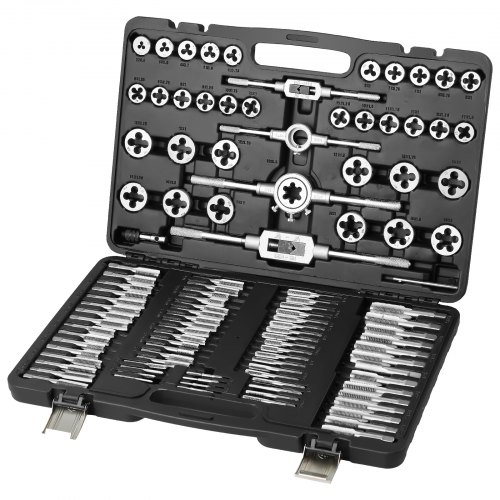
There’s a quiet satisfaction in restoring worn threads or tackling custom bolts, but mismatched tools can quickly make the job a headache. The VEVOR Tap and Die Set 110Pcs Metric Size M2 to M18 promises a practical answer for tradies, DIYers, and engineers who deal with metric fasteners in Australian projects.
⚙️With 110 pieces covering metric sizes from M2 to M18, this kit aims to be your go-to for thread cutting and repair—without cluttering up the shed or your wallet. However, breadth doesn’t always mean depth: expect a broad range, but not every specialty accessory.✅
Tidy Overview: One Kit, Plenty of Possibility
What’s on offer here? The VEVOR set bundles both taps and dies for metric-thread jobs, with bearing steel components promising a balance between durability and affordability. While not a premium specialist set, it gives you ample scope for general thread cutting, chasing, and bolt rescue in and around the workshop. The main trade-off for the price and coverage is likely in fine tolerances and pro-grade finishing—sensible for most home repairs, perhaps less so for high-stakes engine work.
Who Should Seriously Consider This Set (and Who Might Not)
This set is a strong match if:
- You regularly find yourself rescuing rusty or stripped threads on cars, bikes, garden gear or furniture.
- Your work is mostly with metric fasteners (M2–M18 covers much of what you’ll see in home and hobby gear).
- You’re budget-conscious but still want reliable hand tools instead of single-use gadgets.
If you’re an industrial machinist, deal in high-performance race engines, or routinely work with obscure thread patterns, you might need premium sets with ultra-fine sizing and custom taps. This 110-piece kit won’t address imperial sizes, and the supplied hardness is likely tuned for everyday materials—not stainless or hardened steel.
What To Check Before You Buy
Even though this kit covers a wide metric range, don’t skip a sanity check:
- Scan the size list—confirm you get the thread ranges (finer and coarser) you’ll actually use.
- Inspect for common tap styles (taper, plug, bottoming) or check which are included. It matters for blind vs. through holes.
- Ask if replacement parts or individual taps/dies can be bought off the shelf later—helpful if you ever break a favourite size.
- Storage case quality: Is there a case at all? Sturdy organisers keep small tools in check and prevent damage.
For anyone starting out: find out if there’s a guide or chart supplied for recommended drill sizes and preparatory steps. If not, keep a printed metric tap drill chart in your workspace for quick reference.🛡️
Getting Started: Smart Setup & Safety
Begin by unpacking and checking each piece for clean, sharp edges—and give everything a light wipe to remove the shipped protective oil. It’s worth organising your taps and dies in numerical order for speed and error prevention. Always wear safety glasses; threading can throw micro-shards, especially if you rush or hit hardened remnants.
Lubricate well before first use. Cutting oil reduces friction, prevents overheating, and prolongs tool life. Clamp workpieces securely, keep hands clear of spinning tap wrenches, and start threads slowly to avoid cross-threading.
Better Results: Small Habits Add Up
Great threading comes down to preparation and control:
- Always size up your hole or bolt first; a quick caliper check avoids picking the wrong tap or die.
- Use short bursts—don’t try to cut a thread in a single drive. Every quarter turn, clear chips for a smoother cut.
- Select the biggest tap wrench that comfortably fits—this helps maintain even pressure and alignment.
Have a hand brush or compressed air nearby to sweep away filings; debris is the main cause of thread scoring and stuck taps. Don’t skip lubrication, even on softer metals. Preserving the edge on your taps and dies means they’ll outlast the job—if they start dulling, stop and dress the faces with a small file if safely possible.
Maintenance & Care: Keep It Reliable
🔥 Like all hand tools, longevity depends on care more than on-ticket specs. After each use, clean tools with a soft brush and wipe with a lightly oiled rag to keep spots of rust at bay. Return each tap and die to its slot—jumbled toolkits shorten lifespan and risk damage to critical cutting edges.
Use silica gel satchels in the case if you’re working in humid sheds. Inspect the leading edges for chips or dings now and then, especially after threading tougher alloys.
Never use impact tools with these; hand pressure only ensures you don’t shatter or deform the cutting profile. If you notice a tap or die isn’t cutting smoothly, it’s probably time to stop, inspect, and replace or sharpen.
Common Mistakes That Trip Up Users
- Forcing a tap or die instead of reversing frequently to clear swarf. This often leads to stuck or snapped tools.
- Skipping lubrication, which not only heats but wears tools out prematurely.
- Cross-threading by rushing the start or holding the tool at an angle—always check alignment carefully by eye.
- Leaving tools dirty or damp post-use, which guarantees corrosion over time.
Mini FAQ: Straight Answers for Real Users
Can I use this set on stainless or hardened bolts?
Given the bearing steel composition, it’s best for mild and medium carbon steels, aluminium, and general-purpose jobs. For tough stainless, seek out taps and dies labelled for high-strength metals.
Is there a mix of tap types (taper, plug, bottoming)?
The product description doesn’t specify—ask before buying or prepare to purchase extras if you regularly do blind hole tapping.
Will these fit standard metric tap wrenches and die stocks?
Most sets use common sizes, but always check opening ranges just in case—especially for the largest (M18) and smallest (M2) tools.
Is a storage case included?
The listing doesn’t confirm. If not, budget for a robust organiser—these small parts vanish easily.
Are replacement taps or dies available?
It’s smart to ask sellers about ordering popular sizes individually, since some breakage is almost inevitable in heavy use.
About the author and safety review
Ken Walker
Former Station Officer and fire service educator
Fire and emergency service educator with 40 years of career and volunteer experience.
Qualifications: Associate Diploma of Applied Science in Fire Technology; Institute of Fire Engineers studies.
Author profileGeneral information only. Follow official warnings, local procedures and manufacturer instructions.