Petrol, Electric, Mini and Arborist Chainsaws Compared
Chainsaws that look similar on a product page can be designed for very different jobs. A 6-inch cordless pruning saw, a 10-inch top-handle arborist saw and a 20- or 22-inch petrol chainsaw should not be treated as interchangeable tools.
This Firebusters guide compares six established options: the MTM 62SX, BAUMR-AG SX52, BAUMR-AG SX62, BAUMR-AG SC5, POWERBLADE SW7 and BAUMR-AG SX25 25cc 10-inch arborist saw.
The aim is not to name one universal winner. It is to match bar size, power source, weight, chain specification and operating style to the work you actually need to do.
Testing statement: Firebusters has not personally tested these chainsaws. Specifications are based on current manufacturer or supplier information and the safety guidance cited below.
Quick Choice Guide
BAUMR-AG SX25. A 25cc, 10-inch top-handle petrol saw. Best considered by trained or experienced operators who specifically need a compact arborist-style saw. Do not choose it because the advertising mentions single-handed use.
POWERBLADE SW7. A 20V convertible mini chainsaw and pole saw with a 6-inch bar. Its practical role is small branch pruning rather than full-size chainsaw work.
BAUMR-AG SC5. A 2000W corded chainsaw with a 16-inch Oregon bar and chain. No petrol mixing or exhaust, but cord management and electrical safety become part of the job.
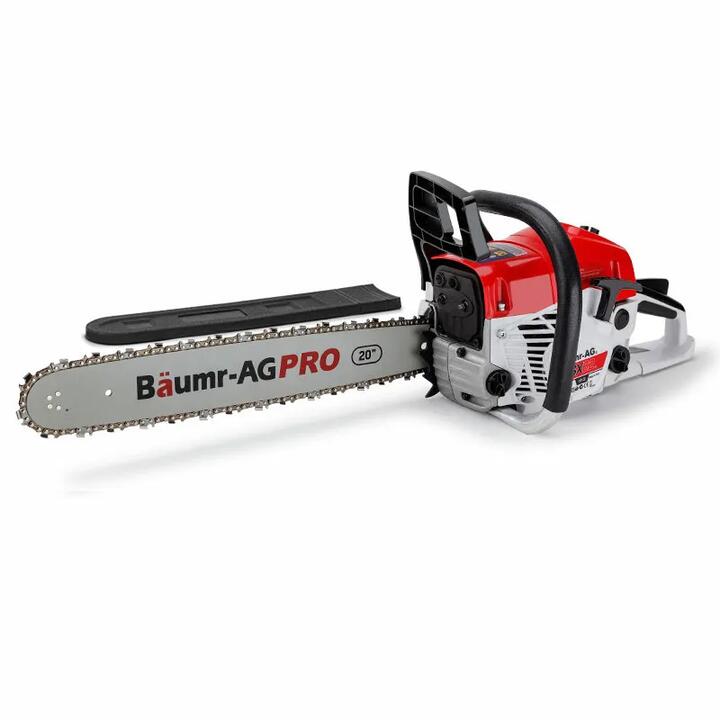
BAUMR-AG SX52 or SX62. Full-size 20-inch petrol saws intended for larger property cutting and firewood tasks where a small pruning saw is not enough.
MTM 62SX. Current supplier information describes the model with a 55cc engine and 22-inch bar. The longer bar brings extra reach but also more leverage, weight and kickback exposure.
Chainsaw Specifications Compared
| Model | Power | Bar | Chain / Cutting System | Listed Weight | Practical Fit |
|---|---|---|---|---|---|
| BAUMR-AG SX25 | 25cc 2-stroke 1.2HP / 0.9kW max | 10″ | 3/8″ pitch .050″ gauge 40 drive links | 3.6kg on current Edisons listing | Specialist compact pruning and arborist-style work |
| MTM 62SX | 55cc petrol 4.3HP supplier maximum | 22″ | .325″ pitch .058″ gauge 86 drive links | 6.6kg | Longer-bar firewood and larger property work |
| BAUMR-AG SX52 | 52cc petrol 4HP supplier rating | 20″ | .325″ pitch .058″ gauge 76 drive links | 6.4kg | General property cutting and firewood |
| BAUMR-AG SX62 | 62cc petrol 3HP / 2.2kW | 20″ | .325″ pitch .058″ gauge 76 drive links | 7kg | Larger general chainsaw jobs |
| BAUMR-AG SC5 | 2000W corded electric | 16″ Oregon | 3/8″ pitch .050″ / 1.3mm gauge 56 drive links | 5kg | Home/property cutting near mains supply |
| POWERBLADE SW7 | 20V 2Ah battery | 6″ | Mini pruning chain 5m/s listed chain speed | 1.6kg mini saw 3kg pole configuration | Small branches and garden pruning |
Bar length is not a safe maximum cutting-diameter guarantee. Timber condition, chain condition, technique, operator competence and the exact saw setup all affect what can be cut safely.
BAUMR-AG SX25 25cc 10-Inch Arborist Chainsaw

25cc · 10-Inch Bar · Top-Handle Design
The SX25 adds a genuinely different category to this comparison. It is not simply a smaller firewood saw. Its compact top-handle layout is aimed at pruning and tree-care work where manoeuvrability matters.
- Engine: 25cc two-stroke petrol
- Maximum published output: 1.2HP / 0.9kW
- Bar: 10-inch sprocket-nose
- Chain: 3/8-inch pitch, .050-inch gauge, 40 drive links
- Fuel capacity: 230mL
- Fuel mix: 25:1 using 95+ RON petrol and suitable two-stroke oil
- Listed product weight: 3.6kg on the current Edisons page
- Features: E-Start recoil system, integrated chain brake and A-VIBE anti-vibration system
- Current standard warranty: 12 months
The previous draft described a two-year warranty. Current Edisons and BAUMR-AG information instead shows a 12-month standard warranty, so Firebusters uses the current 12-month figure.
Important SX25 Weight Note
Edisons currently lists the SX25 at 3.6kg, and the BAUMR-AG product description also repeatedly advertises 3.6kg.
However, a structured dimensions field on the current BAUMR-AG product page displays a conflicting 9kg product weight. Because the current Edisons specification and BAUMR-AG marketing copy agree on 3.6kg, Firebusters uses 3.6kg as the current listed figure while noting the supplier data inconsistency.
If weight is a critical purchase factor, confirm the actual ready-to-use weight with the seller before ordering.
Top-Handle Safety: Do Not Treat “Single-Handed” as a Recommendation
The BAUMR-AG marketing copy describes the SX25 as designed for single-handed operation. Firebusters does not use that promotional statement as general operating advice.
Safe Work Australia’s Guide to Managing the Risks of Tree Work says chainsaws used in trees should be operated with two hands, with a safe and stable working position, suitable attachment, chain-brake use between cuts and appropriate PPE.
Top-handle saws place the controls close to the top of the machine, making them compact and manoeuvrable, but that design also reduces the leverage available compared with a conventional rear-handle chainsaw.
Firebusters recommendation: the SX25 is a specialist compact chainsaw. It should not be chosen by an inexperienced user simply because it is small or because the product page refers to single-handed operation.
AS/NZS Marketing Claim
The BAUMR-AG product page uses wording such as “Exceeds AS/NZS safety standards” and separately refers to an AS/NZS-compliant shoulder strap.
Firebusters did not identify a specific standard number, test certificate or conformity document in the material reviewed that proves a broad compliance claim for the entire chainsaw.
For that reason, this guide does not present the SX25 as independently certified to a particular Australian/New Zealand chainsaw standard. Buyers who require documented compliance for workplace procurement should ask the supplier for the exact standard and supporting documentation.
Petrol vs Corded vs Battery
Petrol
The SX25, MTM 62SX, SX52 and SX62 do not rely on a power lead or battery charge. That suits larger properties and remote work, but brings fuel handling, exhaust, noise, hot surfaces and more engine maintenance.
Corded electric
The SC5 avoids petrol mixing and engine exhaust. The trade-off is dependence on mains power and the need to manage the lead so it cannot enter the cutting path or create a trip hazard.
Battery mini saw
The SW7 is the most compact option for light pruning. Battery power is convenient for short garden jobs, but a 6-inch pruning tool should not be viewed as a replacement for a full-size chainsaw when cutting larger timber.
Bar Length: Bigger Is Not Automatically Better
A longer bar can reach through larger timber, but it also adds leverage and creates a larger kickback zone at the bar nose.
The 22-inch MTM therefore only makes sense when that extra reach is genuinely useful. For routine firewood and general property work, a 20-inch SX52 or SX62 may already provide more capacity than many users need.
For fine pruning, a small tool can be easier to position, but that does not remove chainsaw hazards. The compact SX25 and SW7 still require correct chain tension, lubrication, stable footing and deliberate control.
Kickback and Chain Control
Kickback can occur when the upper part of the bar nose contacts wood or another object, or when the chain becomes pinched. The reaction can drive the guide bar rapidly back towards the operator.
Risk reduction includes:
- maintaining a secure grip;
- keeping the bar nose clear of unintended contact;
- using the correct chain for the saw;
- maintaining correct chain tension and sharpness;
- using the chain brake and guards as designed;
- avoiding cuts above shoulder height; and
- positioning the body out of the likely kickback path where practicable.
Never remove or defeat a chain brake, hand guard or other protective feature for convenience.
Working at Height and Tree Work
Cutting branches above ground introduces fall hazards, falling-object hazards and complex chainsaw-control risks at the same time.
Safe Work Australia guidance for chainsaw use in trees includes maintaining a stable work position, attaching the chainsaw to the climber, using two hands, switching the saw off when moving between work positions and applying the chain brake between cuts.
Working from a ladder with a chainsaw is a poor substitute for proper access and work-positioning equipment.
Home users who cannot complete the work from a stable ground position should seriously consider using a qualified tree professional rather than treating a compact arborist saw as permission to work aloft.
Chainsaw PPE
Safe Work Australia’s tree-work guidance identifies chainsaw-specific PPE including protective trousers or chaps, protective-toe footwear, helmet, eye protection, hearing protection and gloves.
PPE is not a substitute for competent operation, but it is an important final layer when other controls cannot completely eliminate the risk.
The accessories supplied in a retail box should not automatically be assumed to provide all the protection appropriate for every chainsaw task or workplace.
Petrol and Bushfire-Risk Conditions
Petrol chainsaws have hot engines and exhaust components and can create ignition risks around dry vegetation. Chainsaw use may also be restricted during certain fire-danger conditions.
Before operating during the Victorian fire season, check current CFA restrictions and local conditions rather than relying on an old article or general rule.
Keep fuel handling away from ignition sources and allow hot equipment to cool appropriately before refuelling.
Maintenance Before Cutting
- inspect the chain for damage and correct tension;
- check guide-bar condition;
- confirm chain lubrication;
- test the chain brake as instructed by the manufacturer;
- check fasteners and covers;
- inspect petrol saws for fuel leaks;
- keep air filters and cooling areas clean;
- use the correct chain pitch, gauge and drive-link count;
- replace damaged bars or chains rather than continuing to use them; and
- transport the saw with the bar cover fitted.
A sharp, correctly tensioned chain is easier to control than a damaged or neglected chain that encourages the operator to force the saw through the cut.
Buyer Checklist
- Choose the saw for the normal task, not the largest log you may cut once.
- Decide whether petrol independence is worth the additional maintenance and fuel handling.
- Do not treat a small top-handle saw as a beginner chainsaw.
- Match chain pitch, gauge and drive links exactly when buying replacements.
- Check current product weight if portability is important.
- Confirm current warranty terms before commercial or workplace use.
- Use a stable work position and avoid ladder-based chainsaw work.
- Plan how branches and timber will move when the cut completes.
- Keep people clear of the work and drop zone.
- Check current fire restrictions before petrol chainsaw work in dry conditions.
- Use appropriate chainsaw PPE.
Firebusters Practical Recommendation
For small pruning: the POWERBLADE SW7 is the simplest fit where a 6-inch battery pruning tool is enough.
For mains-powered home use: the BAUMR-AG SC5 avoids petrol handling and provides a conventional 16-inch chainsaw format, provided the power lead can be managed safely.
For general petrol property work: the SX52 and SX62 are more conventional full-size choices than a top-handle arborist saw.
For longer-bar jobs: the MTM 62SX’s 22-inch bar should be chosen because the extra reach is genuinely needed, not simply because bigger appears better.
For compact specialist pruning: the BAUMR-AG SX25 offers a 25cc engine, 10-inch bar and low listed weight, but its top-handle format deserves additional caution. Firebusters would not recommend it as the default first chainsaw for an inexperienced home user.
Overall: choose the smallest and simplest chainsaw that safely suits the work, while giving equal weight to operator competence, access, PPE and the environment in which the cutting will be done.
Frequently Asked Questions
What is the BAUMR-AG SX25 chain specification?
The current Edisons listing specifies 3/8-inch pitch, .050-inch gauge and 40 drive links.
How much does the SX25 weigh?
Edisons currently lists 3.6kg, and the BAUMR-AG marketing copy also says 3.6kg. A separate structured weight field on the BAUMR-AG page shows 9kg, so buyers for whom weight is critical should confirm with the seller.
Does the SX25 have a two-year warranty?
Not according to the current product information checked for this update. The current standard warranty shown by BAUMR-AG is 12 months.
Can the SX25 be operated one-handed?
The supplier marketing uses single-handed-operation language, but Firebusters does not recommend using that as general safety advice. Safe Work Australia tree-work guidance says chainsaws in trees should be operated with two hands.
Is a 22-inch chainsaw better than a 20-inch?
Not automatically. A longer bar adds reach but also weight, leverage and a larger kickback zone. Choose it only when the job genuinely needs the extra length.
Is the SW7 a replacement for a petrol chainsaw?
No. Its 6-inch bar and battery mini-saw format suit small pruning tasks rather than general firewood or large timber cutting.
Should I use a chainsaw from a ladder?
Firebusters does not recommend ladder-based chainsaw work. Above-ground tree work needs proper access, positioning, competence and fall-risk controls.
Sources
- Edisons – BAUMR-AG SX25 25cc 10-Inch Arborist Chainsaw
- BAUMR-AG – SX25 Product Information
- BAUMR-AG – SX52 Product Information
- BAUMR-AG – SX62 Product Information
- BAUMR-AG – SC5 Electric Chainsaw
- Edisons – MTM 62SX 22-Inch Chainsaw
- Edisons – POWERBLADE SW7
- Safe Work Australia – Guide to Managing the Risks of Tree Work
- CFA – Fire Restrictions and Machinery Guidance
Specifications, supplier descriptions, warranty terms and fire restrictions can change. Product information checked October 2026.
About the author and safety review
Ken Walker
Former Station Officer and fire service educator
Fire and emergency service educator with 40 years of career and volunteer experience.
Qualifications: Associate Diploma of Applied Science in Fire Technology; Institute of Fire Engineers studies.
Author profileGeneral information only. Follow official warnings, local procedures and manufacturer instructions.