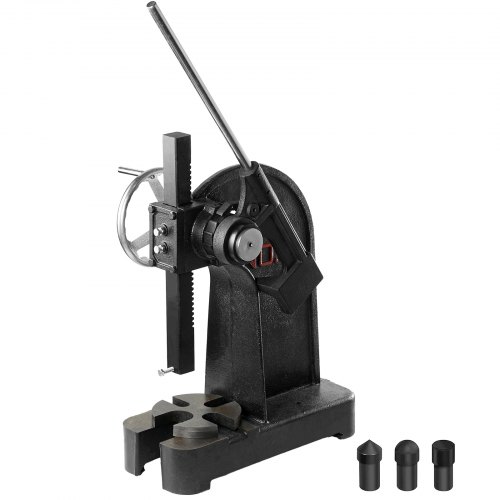
When muscle meets precision, the right tool can save time, overhead, and mistakes. If your workbench regularly sees metal shaping, fitting, or assembly jobs, an arbor press is more than a luxury—it’s a necessity. The VEVOR Arbor Press, 3 Ton Ratchet Type, aims to bring stout power and reliable control to your daily workflow without overcomplicating the task at hand.
With its robust ratchet leverage and cast iron construction, this manual desktop press is engineered for a variety of jobs: stamping, bending, stretching, and forming. The main compromise? Manual presses require steady hands and reasonable physical effort, especially at higher tonnages.
Where This Arbor Press Fits In
This VEVOR model delivers up to three tonnes of pressing force in a relatively compact, controlled platform. Its ratchet mechanism and handwheel allow for precision—essential when manipulating metals, setting bearings, or pressing bushings. However, it’s strictly manual; those needing faster, high-volume industrial output may need hydraulic or power options.
Who’s It Suited To—and Who Should Pass
⚙️ Ideal for small workshops, makerspaces, repair technicians, and hobbyists working with moderate metal sections. It covers jobs like basic forming, assembling press-fit components, and flattening or straightening pieces. If you need repeatable accuracy without electricity or compressed air, it’s a practical choice.
Less suited for:
- Large-scale, repetitive manufacturing (where production speed is critical)
- Jobs requiring more than 3 tonnes of press force
If your workload involves delicate electronics or only light pressing, a smaller-capacity press is likely more economical and comfortable to use.
What to Check Before You Buy
Before adding this 3-tonne press to your bench, slow down and measure up. Ensure your workpieces fit its advertised maximum height (30.99 inches) and shape. It’s designed for desktop mounting, so confirm your bench is sturdy and reinforced for repetitive forces.
Ask yourself these questions:
- Will the press throat and working area accommodate your most common parts?
- Is cast iron a good match for your durability needs and environment?
- Can you safely manage manual leverage, or would a powered press improve ergonomics?
It’s also wise to check user-accessible features—the handwheel and ratchet mechanism should operate smoothly, with clear feedback. If possible, inspect for any sharp edges or casting marks before first use, as these can affect comfort and precision.
Getting Set Up and Using It Safely
Begin by placing the press on a level, vibration-free surface. Fix it securely—bolting to a solid benchtop is highly recommended to prevent movement or tipping. Before first use, inspect the ratchet mechanism and handwheel for any debris or shipping residue, and cycle the press gently without a load to check for smooth operation.
For initial jobs, start with softer metals or practice pieces to get a feel for force control. Always position your hands away from the pressing area. When adjusting height, use the handwheel cautiously to avoid pinched fingers or sudden movements.
Using the Press – Everyday Tips ✅
- Apply steady, even pressure; rushing invites mistakes.
- Clean your work area and press surfaces before each job—metal filings or oil can cause slipping or damage.
- For long sessions, take short breaks to avoid fatigue and loss of control.
- Mark your workpiece for correct alignment before pressing—once started, reversing isn’t always easy.
Long-Term Care and Upkeep
Routine care will add years to your arbor press and avoid unexpected downtime. Wipe down exposed metal parts after use, especially if your space is prone to humidity or fine dust. Keep the ratchet, handwheel, and any sliding surfaces lightly oiled but never dripping; too much lubricant can attract grit.
Once a month (or after heavy use), inspect for play or looseness in joints and fasteners. Address any movement before it causes wear or alignment issues.
Avoid These Common Pitfalls
- Forgetting to bolt down the press—unsecured presses can move, slip, or even fall under high loads.
- Using excessive force; if something won’t press, stop and check your setup. Forcing a jammed part risks both injury and machine damage.
- Neglecting to wear safety gear, especially eye protection. Small metal shards or debris can be a real hazard with manual presses.
- Skipping regular maintenance—rust, grime, or unnoticed wear can quickly make a solid tool unreliable.
Mini FAQ – What Users Ask First
Can the VEVOR arbor press handle repeated heavy use?
It’s built from cast iron and uses a manual mechanism, which is durable for standard use. For intense, daily industrial workloads, inspect and maintain parts regularly, and consider whether manual operation makes sense long-term.
How much space does it need?
Allow for its 30.99-inch height and enough room around the press arm movement. A standard, reinforced benchtop should suffice.
What are its main manual features?
It employs a ratchet leverage system with a handwheel, which gives you direct control and feedback during each press attempt. Always test adjustments before working on final parts.
Does it come with accessories?
The description doesn’t specify. If you need dedicated dies, plates, or attachments, verify what’s included or available to avoid setup surprises.
Can I use it for materials other than metal?
While intended for stamping, forming, and related metalwork, it may be suitable for similar-force tasks on plastics or composites. Always confirm with a test piece first.
Who Should Consider This—And Next Steps
The VEVOR 3 Ton Ratchet Type Arbor Press hits a local sweet spot for reliability, versatility, and affordability for Australian workshops. If your projects involve consistent pressing jobs, from bearing installation to basic stamping, and you want to avoid the complexity of powered or hydraulic units, this offers practical power in a compact package.
Measure up your workspace and needs, compare it to your intended applications, and don’t hesitate to check user reviews for real-world experiences. A careful first setup will reward you for years with safer, faster, and better-finished results. Ready to set it up? Secure your bench and let practical muscle go to work.
About the author and safety review
Ken Walker
Former Station Officer and fire service educator
Fire and emergency service educator with 40 years of career and volunteer experience.
Qualifications: Associate Diploma of Applied Science in Fire Technology; Institute of Fire Engineers studies.
Author profileGeneral information only. Follow official warnings, local procedures and manufacturer instructions.