Ground Preparation Guide
Choosing a Plate Compactor
Plate compactors consolidate suitable soil, sand, gravel, road base and asphalt during paving, landscaping and construction work. Machine weight is important, but it should not be the only selection factor.
Also consider the material, required finished density, layer thickness, plate dimensions, centrifugal force, site access and safe transport arrangements.
Testing statement: Firebusters has not personally tested the BAUMR-AG BCX-800. This guide uses current supplier specifications and official Australian plant-safety guidance. Actual compaction results depend on the material and site conditions.

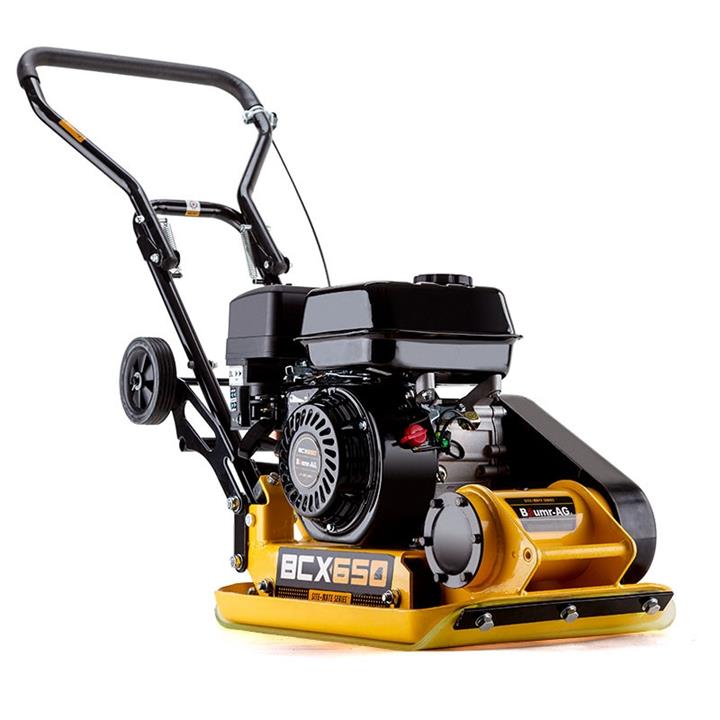
BAUMR-AG BCX-800
A forward-moving petrol plate compactor with a 208cc engine, 545 × 400mm plate, 13kN centrifugal force and asphalt sprinkler system.
Sponsored external link · Opens in a new tab
Types of Compaction Equipment
| Equipment type | Common application | Main limitation |
|---|---|---|
| Small forward plate | Paths, paving repairs and restricted landscaping areas | Lower productivity and compaction capacity on larger jobs |
| Larger forward plate | Paving bases, driveways, landscaping and asphalt work | Greater transport weight and more difficult turning |
| Reversible plate | Larger areas and deeper granular base preparation | Heavier, more expensive and potentially excessive for small domestic work |
| Vibrating rammer | Narrow trenches and suitable cohesive materials | Small contact area makes it inefficient for broad, open surfaces |
The appropriate machine must be selected for the actual material and specified compaction result. A heavier machine is not automatically suitable for every site.
Verified BCX-800 Specifications
| Specification | Published detail |
|---|---|
| Model | BAUMR-AG BCX-800 |
| Supplier SKU | CONCOMBMRB8C0 |
| Engine | 208cc, 7HP OHV four-stroke petrol |
| Starting system | Recoil |
| Fuel | Regular unleaded petrol, 95 RON or higher |
| Fuel capacity | 3.6L |
| Engine-oil capacity | 0.7L |
| Plate size | 545 × 400mm |
| Centrifugal force | 13kN |
| Vibration frequency | 5,500 vibrations per minute |
| Walking speed | 15m/min |
| Published compaction depth | Up to 300mm in soil, subject to material and conditions |
| Water tank | 14L |
| Dry product weight | 90kg |
| Maximum operating mass | 111kg with tanks full |
| Product dimensions | 47 × 93 × 102cm |
Understanding the Sprinkler System
The supplier states that the 14L sprinkler system keeps the base plate cool and reduces asphalt sticking to it. It should not be described primarily as a soil-moisture or dust-suppression system.
- Use the sprinkler only as directed by the manufacturer.
- Confirm whether water is appropriate for the material being compacted.
- Do not assume adding water will improve every soil or base.
- Excess water can weaken, displace or turn some materials into mud.
- Flush and inspect the system according to the manual.
Correct moisture content for engineered fill or structural work should be determined by the project specification or a suitably qualified person.
What Jobs May Suit the BCX-800?
- Granular bases beneath suitable paving and landscaping work
- Driveway and pathway preparation
- Sand, soil and gravel where a forward plate is appropriate
- Asphalt work where its sprinkler arrangement is suitable
- Outdoor projects with adequate operating and turning space
The published 300mm compaction depth is a supplier rating rather than a guarantee that one pass will compact every material to that depth. Effective results can change with particle size, moisture, layer thickness and the number of passes.
When Another Machine May Be Better
- A smaller forward plate for narrow access or minor repairs
- A reversible compactor for demanding or larger granular-base work
- A rammer for suitable narrow trenches
- Specialist rollers or compaction equipment for major civil work
- Hire equipment when the machine is needed for only one project
Critical Safety Guidance
- Read the complete manual before assembly, starting or operation.
- Keep guards and protective components correctly installed.
- Wear suitable eye, hearing and foot protection.
- Keep bystanders away from the machine and work zone.
- Locate underground services before compacting.
- Keep clear of unsupported edges, excavations and unstable ground.
- Do not operate across a slope unless the manual and site assessment permit it.
- Never place hands or feet beneath the plate.
- Stop the engine before clearing debris, inspecting or adjusting the machine.
- Allow hot engine and exhaust components to cool before refuelling.
- Never smoke or use ignition sources near petrol.
Noise and Vibration
Plate compactors expose operators to substantial noise and hand-arm vibration. The handle’s shock-absorption system may reduce transmitted vibration, but it does not eliminate the hazard.
Commercial users should assess exposure, maintain the machine and manage operating duration under applicable workplace-safety requirements. Gloves alone should not be treated as adequate vibration protection.
Dust
Compacting dry soil, sand or crushed material can produce airborne dust. Determine what material is present and use suitable controls. Some construction materials can contain respirable crystalline silica, which requires specific risk controls.
Transport and Loading
A 90kg dry machine should not be manually lifted into a vehicle. The BCX-800 includes fold-away wheels and a lifting hook, but both must be used only as instructed.
- Plan unloading before delivery or collection.
- Use a suitable ramp, lifting device or mechanical loading system.
- Use only rated lifting equipment and approved lifting points.
- Never stand beneath a suspended compactor.
- Drain or isolate fluids where the manual requires it for transport.
- Secure the machine against movement during vehicle transport.
- Keep fuel upright and comply with applicable transport requirements.
The wheels assist movement on suitable level surfaces. They do not make the machine easy to control on steps, steep slopes or soft ground.
Pre-Start Checklist
- Inspect the plate, frame, handle, guards and fasteners.
- Check for petrol, oil or water leaks.
- Confirm the correct engine-oil level.
- Check the fuel and water systems against the manual.
- Remove debris from cooling and moving components.
- Inspect the work area for services, holes, edges and obstructions.
- Confirm that children and bystanders are excluded.
- Check that safe shutdown controls operate correctly.
Do not operate the machine if it has unusual vibration, damaged guards, leaking fuel, loose components or unreliable controls.
Operation and Maintenance
Prepare material in suitable layers and follow the project specification. Operate at a controlled walking pace without pulling, forcing or attempting to overpower the machine.
- Use overlapping passes where required by the work specification.
- Keep stable footing and maintain control of the handle.
- Do not allow the machine to strike structures or fall from an edge.
- Stop if the material becomes unstable or the compactor behaves abnormally.
- Follow the manual’s engine-oil and air-filter service intervals.
- Check fasteners regularly because vibration can loosen components.
- Clean the underside only after shutdown, isolation and cooling.
- Drain condensation, fuel or water only as instructed.
- Store the compactor level, dry and protected from unauthorised use.
Questions Before Buying
- Is a forward-moving plate suitable for the intended material?
- Will its 545 × 400mm plate fit all access points?
- How will the 90kg dry machine be loaded and transported?
- Does the job require a verified finished density?
- Are underground services present?
- Is the 14L sprinkler needed for the intended surface?
- Are replacement belts, engine parts and sprinkler components available?
- Who will service the machine locally?
- Would hiring a different compactor be safer and more economical?
Frequently Asked Questions
Does the BCX-800 weigh 90kg or 111kg?
Its published dry product weight is 90kg. Its maximum operating mass is listed as 111kg with the tanks full.
What is the sprinkler designed to do?
The supplier states that it helps cool the base plate and reduce asphalt adhesion. It should not be assumed to provide the correct moisture content for soil compaction.
Can it be used inside a building?
No. Its petrol engine produces carbon monoxide and other exhaust gases. It must be operated outdoors and away from openings.
Will it compact 300mm in one pass?
The supplier publishes a maximum soil-compaction depth of 300mm, but actual results depend on material, moisture, layer thickness and passes. Follow the project specification rather than assuming this result.
Can two people lift it into a ute?
Manual lifting of a 90kg machine presents a serious injury risk. Plan a suitable mechanical loading method and follow the manual’s lifting instructions.
Final Assessment
The BAUMR-AG BCX-800 combines a 208cc petrol engine, 13kN centrifugal force, 545 × 400mm plate and asphalt sprinkler system. It may suit outdoor paving, landscaping and suitable granular-base work where its size and forward-only operation match the job.
The major buying considerations are its 90kg dry weight, safe transport, vibration exposure, petrol-engine hazards and whether the selected machine can achieve the project’s required compaction result.
Sources
- Edisons – BAUMR-AG BCX-800 specifications
- Safe Work Australia – Managing risks of plant in the workplace
- Safe Work Australia – Lifting, pushing and pulling
Sources checked 4 September 2026. Specifications, availability and warranty conditions can change.