Getting truck loads safely under bridges and through warehouses depends on knowing your true clearance. Too many businesses leave that to guesswork. The VEVOR Load Height Measuring Stick aims to put accuracy front and centre—quietly helping drivers, warehouse staff, and fleet operators stay compliant and avoid mishaps.
This tool doesn’t grab headlines, but it may save your team from costly damage or delays. It’s for anyone who needs to check load or vehicle heights quickly and reliably, without a fuss.
Quick Take: Where This Stick Stands
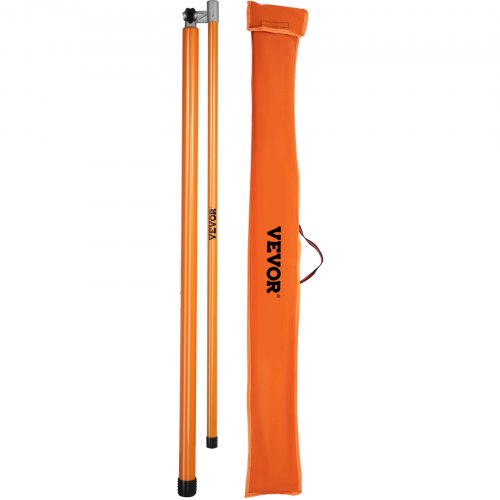
The VEVOR Load Height Measuring Stick is a compact, sturdy measuring tool, able to extend up to 20 feet. Its main job is helping you measure truck, trailer, or load height on the spot, keeping things safe and legal. The trade-off: it’s manual, so you’ll need a steady hand and accuracy comes down to the user’s attention. For most, that’s a fair exchange for its portability and simplicity. 🧰
Who Should Reach for This
This stick is a fit for logistics companies, truck drivers, loading dock staff, removalists, and warehouse teams—anyone responsible for moving tall objects by road. If your work involves checking clearances before setting off or heading under bridges, it’s worth having one in the toolkit.
However, those looking to automate height measurement or integrate it with electronics might find this stick too hands-on. If precision to the millimetre is needed for technical compliance (not typical for transport), you may need to explore calibrated or digital solutions.
Checks Before You Buy
Durability and visibility matter with measuring tools. Before buying, here’s what to look out for:
- Check that the stick is rated for your maximum load height—20′ covers most transport needs, but measure your tallest loads first.
- Look for clarity of the markings. You’ll want numbers and increments that are easy to spot, even in low light. 🔎
- If you expect regular field use, confirm how the sections lock and release—test for wobble or excessive play.
- Ask about replacement parts or repair options, just in case you drop or damage a segment.
Not every truck bay or depot is suited to a 20’ stick; consider your storage and transport space as well. If the description doesn’t mention it, check photos or ask suppliers about folded size and case options.
Setting Up: Get the Basics Right
On first use, start with a clean, dry stick—moisture or dirt can jam telescoping joints. Inspect for shipping damage before extending. Stand safely beside your vehicle or load, never on a moving surface, and always avoid overhead hazards. 🛡️
Measure from level ground. Hold the base firmly, align vertically, and extend section by section until the tip touches the highest point of the load. Take two measurements per load if possible, one at the front and one at the rear, to account for tilt or irregular shapes.
Practical Use Habits for Reliable Results
- Double-check that all telescoping segments are locked fully before reading the measurement.
- Clear the area above you before extending, especially in yards with low power lines or racking.
- Record heights immediately—don’t rely on memory.
- Pair visual checks with the stick’s reading for extra confidence.
In busy settings, assign measurement duties to trained staff to keep things consistent.
Routine Care: Keeping It Straightforward
Height sticks work best when kept in good condition. After each use, wipe down with a soft cloth to prevent grit from clogging telescopic sections. Store somewhere dry and flat. If the stick is exposed to rain or condensation, allow it to dry before collapsing to prevent rust or mildew.
Test locking mechanisms every few weeks. A drop of light oil on joints (according to manufacturer instructions, if provided) will help retain smooth action. ⚙️
Common Missteps to Avoid
It’s easy to get comfortable with routine tools and let standards slip. Key mistakes to steer clear of:
- Forcing the stick when retracting—this may damage joints or misalign numbering.
- Assuming the load height stays constant if the vehicle is reloaded or moved—always remeasure after changing the load.
- Ignoring environmental hazards like wind, which can make tall sticks unstable.
- Storing the stick while wet or dirty, leading to stubborn joints and faded markings.
It’s a simple tool, but professionalism starts with basic habits.
FAQ: Understand It, Use It Well
Accuracy depends mostly on user technique and clear markings. For transport work, it’s usually accurate enough to check clearances and keep loads safe.
Can one person use the stick solo?
Yes—one person can measure most vehicle heights alone, but ensure safe ground and good visibility.
Does it require calibration?
Basic height sticks don’t usually need technical calibration, but you should check zero point and markings regularly for wear.
What if I need to measure in the dark?
Look for high-contrast or reflective markings, or use a small torch to read measurements at night or in dim conditions.
Is it suitable for non-transport uses?
Yes, it can help measure clearances for gates, storage racks, or just about any tall object—the principle is the same.
Final Thoughts: When Accuracy Matters
If you need a fast, portable way to check truck or load heights, the VEVOR Load Height Measuring Stick offers a straightforward answer. It’s not for automated fleets or those demanding fine-tuned precision, but it fills a vital gap for everyday logistics and trades. 🔥
Those responsible for vehicle safety should keep simple tools like these close at hand, train staff in their correct use, and prioritise routine checks for peace of mind. Consider where and how you’ll use it, ask the right questions, and your investment will return order and safety to what’s often left to guesswork.
About the author and safety review
Ken Walker
Former Station Officer and fire service educator
Fire and emergency service educator with 40 years of career and volunteer experience.
Qualifications: Associate Diploma of Applied Science in Fire Technology; Institute of Fire Engineers studies.
Author profileGeneral information only. Follow official warnings, local procedures and manufacturer instructions.