No one wants downtime mid-project because of a sluggish or unreliable compressor. If you’re looking to revive your workshop’s air supply without overspending, a replacement pump head can be a smart move. Let’s see if the VEVOR Air Compressor Pump Head fits the bill for Australian home and trade users who demand steady output and sane running costs.
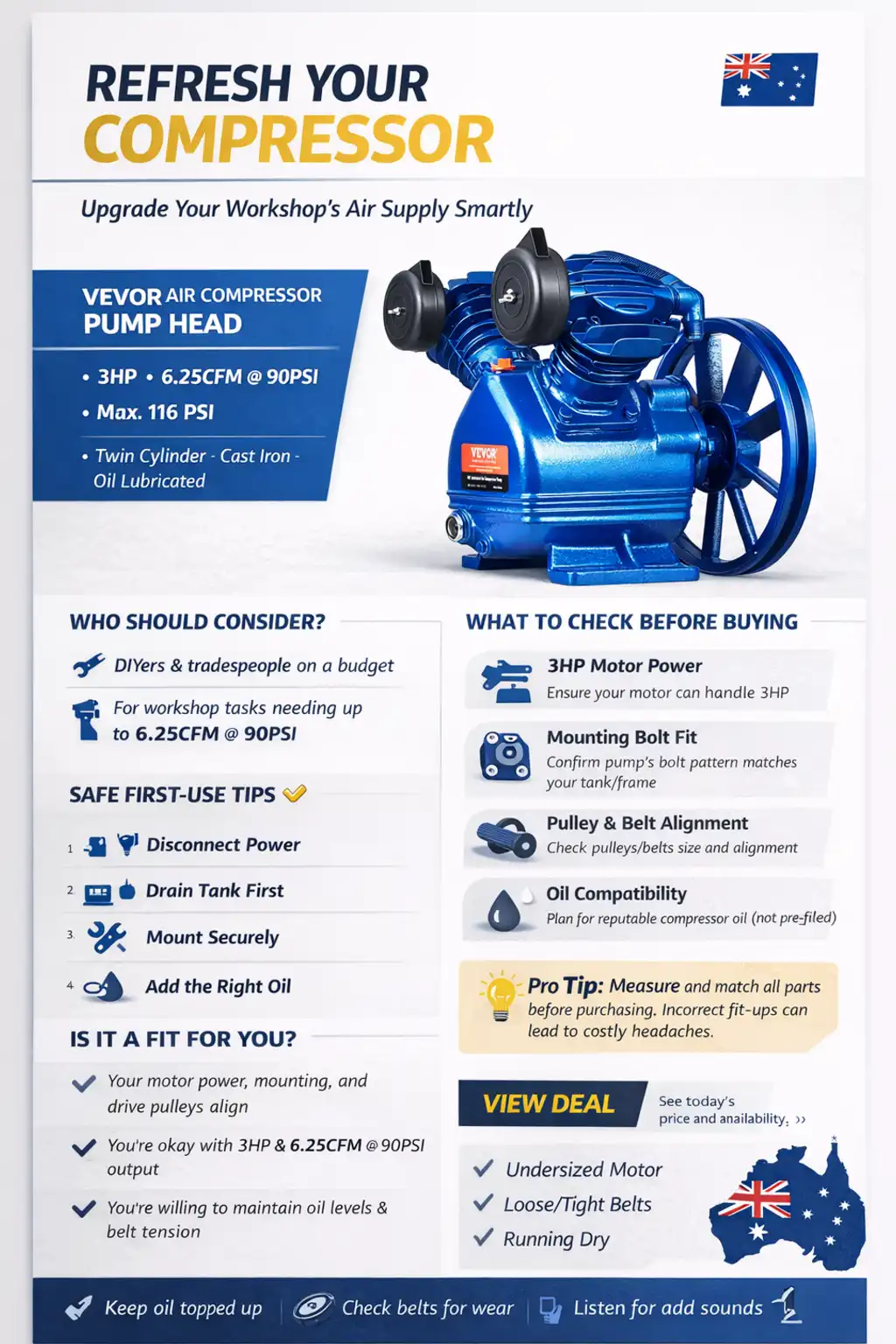
Practical Upgrade Checklist
Print it. Keep it visible. Tick items as you go.
Tip: open the PDF and print as “Fit to page”.
With the promise of 3HP and 6.25CFM at 90PSI, this twin-cylinder, oil-lubricated unit is positioned for small to medium jobs—think intermittent tool use or light workshop duties. Its cast iron construction adds durability, but keep in mind the single-stage V-type design means this isn’t for high-pressure, heavy industrial tasks. The main compromise is output headroom: it tops out at a max. 116PSI pressure—ample for most standard air tools, but not all specialised requirements.

Who Should Consider This Pump—And Who Shouldn’t ⚙️
The VEVOR Air Compressor Pump Head suits:
- DIYers, tradespeople, and small workshop owners needing to replace a tired or failed pump while sticking to a budget
- Anyone after reliable performance for air tools, tyre inflation, paint spraying, and blow-down tasks where outputs up to 6.25CFM at 90PSI are sufficient
This isn’t for those seeking ultra-quiet operation, very high pressures, or continuous heavy-duty use (e.g. sandblasting, large-scale spraying). If your current compressor setup needs more air than this provides—or demands higher psi—best look elsewhere.
What to Check Before You Buy ✅
Before committing, check your existing compressor’s compatibility. Key factors include:
- Motor Power: Your current motor must support 3HP to drive this pump correctly. Undersized motors may overheat or fail prematurely.
- Mounting Fit: Confirm the pump’s bolt pattern matches your tank or frame. If the datasheet or manual is missing, measure twice before ordering.
- Drive Pulley and Belt Alignment: Ensure your system’s pulleys and belts suit the pump’s shaft size and alignment. Replacing mismatched pulleys can be a hidden cost.
- Oil Lubrication: This unit needs the right type and amount of oil. If oil details aren’t included, plan to use a reputable compressor oil formulated for piston pumps.
Safe First-Use: What to Do 🛡️
Installing a new compressor pump isn’t difficult for the practically minded, but safety and methodical steps matter:
- Disconnect your system from mains—always start with power off to avoid shocks or accidental startup.
- Drain your compressor tank completely. This reduces risk during plumbing and mounting changes.
- Carefully mount the new VEVOR head, checking all bolts and fastenings for correct torque (hand-tight to spec, avoid overtightening cast iron).
- Fit the pulley and belt, confirm smooth straight travel—use a straightedge if necessary.
- Add the correct oil to the pump if not pre-filled. Never run it dry, even for testing.
- Double-check all hoses, clamps, and safety valves before briefly powering on to check for leaks or abnormal sounds.
Getting the Best from Your Pump 🔥
Consistent results come down to two habits: keep the oil topped up, and avoid overheating.
- Run the unit within its rated duty cycle—this means regular breaks if in near-continuous use.
- Listen for odd sounds. Thumping or screeching usually signals belt, lubrication, or mounting issues.
- Inspect intake filters regularly—clogged filters strain the pump and degrade airflow.
- Keep the area free of dust and debris. Good ventilation extends both pump and motor life.
For DIYers seeking a quieter workbench: mount the pump securely, and consider basic vibration isolation pads.
Ongoing Maintenance and Care
Oil-lubricated pumps, like this one, need thoughtful maintenance but reward you with longer life.
- Check oil levels each week, or every few uses under heavy load. Top up and replace oil as you would with a car engine—old or dirty oil shortens pump life.
- Inspect belts for wear, fraying, or tension loss. Adjust or replace before something ‘gives way’ mid-job.
- Drain any tank moisture promptly after use. Trapped water fosters rust, which can damage new pump heads over time.
Common Mistakes to Avoid ✅
- Using an underpowered motor: This can stall the pump or cause the motor to trip breakers.
- Incorrect belt tension: Too loose and the pump slips; too tight and bearings wear out early.
- Running dry: Operating without oil, even briefly, leads to rapid piston and bearing wear.
- Neglecting intake filtration: Small particles damage cylinder walls and valves.
FAQs—Short Answers to Key Questions
- Will this increase my airflow? Only if it’s replacing a lower-output head. Match your air demand to 6.25CFM at 90PSI.
- Does it come pre-filled with oil? Not specified—always confirm before running. Add oil before use if in doubt.
- Is it loud? Twin-cylinder pumps are generally moderate in noise, but loudness depends on install and setup.
- Can I fit it to any compressor tank? Only if mounts, motor power, and drive pulleys match. Check before buying.
- What tasks is it best for? Standard air tools, tyre inflation, modest spray painting, and light clean-up jobs.
Your Next Steps: Smart, Safe Air Power
The VEVOR Air Compressor Pump Head makes sense for anyone who needs to refresh a medium-duty compressor on a realistic budget. Its robust cast iron build and straightforward output suit many typical workshops and home garages across Australia. Do your fit checks, prioritise setup safety, and keep up with maintenance for smooth, reliable service.
If this pump fits your setup, order in confidence—and if not, now you know what important questions to ask before you buy. Simple steps, safer air. 🔧
About the author and safety review
Ken Walker
Former Station Officer and fire service educator
Fire and emergency service educator with 40 years of career and volunteer experience.
Qualifications: Associate Diploma of Applied Science in Fire Technology; Institute of Fire Engineers studies.
Author profileGeneral information only. Follow official warnings, local procedures and manufacturer instructions.